Friday, December 6, 2013

Black Hole May be a Suitable Replacement for an Origin Theory


Niayesh Afshordi is an an astrophysicist with the Perimeter Institute for Theoretical Physics in Canada, and he may have an alternate theory for how our universe came to be. As opposed to the current Big Bang theory, Afshordi postulates that our universe may be the event horizon of a 4D black hole. If this theory turns out to describe our universe (and its evolution) better than the current theory, it could have drastic impacts on how we understand our universe's evolution and its eventual end.


A Unifying Theory: One Step Closer.


MIT physicist Julian Sonner has built upon recent theoretical research into black holes and wormholes and may have discovered the link between quantum mechanics and general relativity that has eluded physicists.

Using various quantum concepts, Sonner was able to show that when creating two entangled quarks, a wormhole is opened between them that travels through the fifth dimension (with our regular three dimensions and time as the first four). There research into this also suggests that these wormholes are responsible for gravity on a macroscopic scale, which would explain why quantum mechanics has not been able to reconcile with our current understanding of gravity.

This research could allow us to create more accurate theories about the universe, potentially unlocking technologies and methods such as wormhole travel, and gravity manipulation, previously thought to be safely anchored in the realm of fiction.


read the rest of the article by Will Parker here.
Bringing Superconductors to You (hopefully)!

J.C. Séamus Davis and Dung-Hai Lee have developed a new theory for superconductors and the properties they exhibit (which sometimes prevent them from operating at high temperatures. The hope is that with this theory (if it holds true) we will be able to understand why superconductivity happens in various materials, and eventually create a superconductor that is functional and stable at room temperatures.

Superconductors are materials that let electricity flow through them with no resistance, meaning when we run, say, a computer or electric motor, none of the energy put into making it work is lost to heat. One notable use would be for power transmission; no energy would be lost while sending electricity from the power plant to your house!

J.C. Séamus Davis is a James Gilbert White Distinguished Professor in the Physical Sciences at Cornell and director of the Center for Emergent Superconductivity at Brookhaven National Laboratory.

Sciences at Cornell and director of the Center for Emergent Superconductivity at Brookhaven National Laboratory,

Read more at: http://phys.org/news/2013-12-superconductor-theory-revolutionize-electrical.html#jCp
James Gilbert White Distinguished Professor in the Physical Sciences at Cornell and director of the Center for Emergent Superconductivity at Brookhaven National Laboratory,

Read more at: http://phys.org/news/2013-12-superconductor-theory-revolutionize-electrical.html#jCp
James Gilbert White Distinguished Professor in the Physical Sciences at Cornell and director of the Center for Emergent Superconductivity at Brookhaven National Laboratory,

Read more at: http://phys.org/news/2013-12-superconductor-theory-revolutionize-electrical.html#jCp
James Gilbert White Distinguished Professor in the Physical Sciences at Cornell and director of the Center for Emergent Superconductivity at Brookhaven National Laboratory,

Read more at: http://phys.org/news/2013-12-superconductor-theory-revolutionize-electrical.html#jCp
Dung-Hai Lee is a professor of physics at the University of California-Berkeley and faculty scientist at Lawrence Berkeley National Laboratory
professor of physics at the University of California-Berkeley and faculty scientist at Lawrence Berkeley National Laboratory

Read more at: http://phys.org/news/2013-12-superconductor-theory-revolutionize-electrical.html#jCp

read the article by Bill Steele at news.uci.edu
Math: The Next Cancer Finder?

Joachim Spatz is a Director at the Max Planck Institute for Intelligent Systems in Stuttgart and a Professor at the University of Heidelberg, and he and his team may have just revolutionized cancer identification. 
 
In modern methods of identifying cancerous cells, doctors need to take a biopsy of tissue, stain it using certain antibodies and markers, and then use their doctor magic to tell what's cancerous and what's not. This has a sensitivity (or rate of positive identification) of 85%. Spatz's method looks at the details of the cell for certain mathematical properties, and boasts a 97% successful positive identification of cancerous cells.

Perhaps a world free of disease will be within our reach soon.

Fresh Water under the Ocean Floor
Photograph by Sebastian Meckelmann, from the article "10                                                        
Things You Can Do to Save the Ocean" by National Geographic.                                
              
/ Vincent Post, from Flinders University in Adelaide, has helped make a rather startling discovery: fresh water in our oceans. The water is contained in aquifers formed by regular rainfall long ago when the sea levels were lower, and were trapped underneath the ocean after the polar ice caps melted some 20,000 years ago (Post). The water is usually a mixture of seawater and fresh water (called brackish water), but Post says there are also some deposits of fresh water. Either way, purification and/or desalination would be less expensive than with typical seawater, and may prove to be a godsend for areas experiencing water scarcity. 

You can read more in the article from ABC here */

Monday, December 2, 2013

Nano-Sponges as a vaccine against MRSA


Engineers from UC San Diego have developed a kind of "vaccine sponge" which soaks up the toxins from MRSA, allowing the body to create antibodies that actually go after the toxin itself. This is a huge breakthrough, making otherwise lethal doses of the toxin manageable. You can read more about the nano-sponges here:

http://scitechdaily.com/nanoengineers-develop-nanosponge-vaccine-fight-mrsa-toxins/

Monday, November 25, 2013

Researchers break Newton’s third law — with lasers

image courtesy of ExtremeTech.com                                                         

Researchers have apparently managed to break Newton's third Law; by cleverly causing photons to interfere with each other just right, they have managed to get the massless photons to behave as though they did have mass, and even to behave as though they had negative mass. Negative mass is something that would generate the opposite of gravity, a repulsion of matter. Such a material would have strange properties, as it would repel matter, yet itself be attracted to the repelled matter (google "negative mass" and/or visit this site to see the funkadelic math this entails). If we used a block of this material, we could effectively accelerate without any energy input (which would also violate Newton's Third Law). And that is just what happens in this article!


Article

Astronomers at the University of Berkeley have purportedly discovered two new super-massive black holes each at the center of galaxies more than 300 million light years away. While at first it just seems cool (these monsters have event horizons that are "200 times the orbit of Earth, or five times the orbit of Pluto" (Sanders) ), they will also help us understand how these celestial bodies could grow so large, and can offer us clues as to how the universe would have looked like long ago.

The article by Robert Sanders can be found at:
newscenter.berkeley.edu
Spears Pre-dating Humans

   As my title suggests, stone-tipped spears were recently found at Gademotta, a stone-age site in Ethiopia (Viegas), that have been dated to 280,000 years ago, over 80,000 years before the first fossils of our species are dated to. This could mean that the spear had been used much earlier than scientists originally thought, and that a predecessor species had the intelligence and craftiness to fashion a spear before homo sapiens had evolved. According to the article, this could drastically change our evolutionary tree.


Monday, November 11, 2013

Currently, word puzzles and vitamin supplements are thought (at least to the mainstream) to stave off cognitive decay that comes with ageing. However, a new study challenges that popular notion, finding that when the elderly are enrolled in a 14-week (or a semester-long) course, the cognitive benefits outweigh those caused by doing mere puzzles.

Source

The study seems to be well structured, and if repeated on a large scale with the same findings, could change the way we combat mental decline.

Wednesday, November 6, 2013


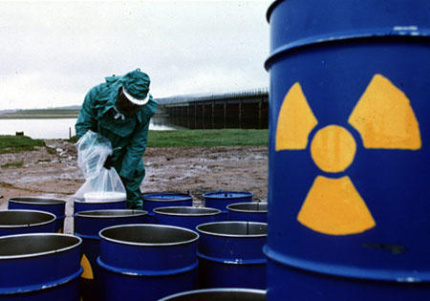
Volume of nuclear waste could be reduced by 90 per cent

http://www.sheffield.ac.uk/news/nr/nuclear-research-sheffield-university-fukushima-1.324913

picture from ourenergypolicy.org                                                       


In this article, engineers from University of Sheffield found a way to reduce the volume of certain nuclear waste (plutonium contaminated waste). By taking the waste and mixing it with furnace slag at high temperatures, they are able to trap the radioactive plutonium in a glass and remove the non radioactive portions at the same time. They (the engineers) mention that the common wastes of this type are "...filters, used personal protective equipment (PPE) and decommissioning waste such as metals and masonry." (University of Sheffield). This means the main contribution to the volume of this waste is actually non hazardous materials, so just separating the plutonium from the materials would reduce the volume of waste.

Unfortunately, I notice that this seems to only apply to plutonium, and the test that these researchers did used Cerium instead of plutonium. So some nuclear waste can be made smaller, but there's no guarantee for other wastes, and they still need to test if their method works with actual plutonium.

Saturday, September 21, 2013


Research team develops tattoo-like skin thermometer patch


by Bob Yirka, at Phys.org

   A team of researchers has developed a "patch" which can monitor the heat on your skin. The patch is only a few inches across, and is paper thin, making it appear as a tattoo as opposed to an electronic device. The patch is the latest of a number of patches made by the team led by John Rogers from the University of Illinois; the team has created patches that have "sensors, radio frequency capacitors, LEDs, transistors, wireless antennas, conductive coils and even solar cells for power." (Yirka). The patch is also pliable, making sure it will continue to work even if the skin it's been attached to twists  or stretches.
   The patch can monitor the heat at different points of the skin, and is accurate to 0.02 degrees Celsius. This gives the device the ability to monitor heat flow and the constriction and dilation of blood vessels, making the device an easy way to measure some aspects of cardiovascular health and circulation. As of now, the patch isn't ready for the public, as it still requires an external power source, but the team is working on different ways to power the patch (and they've already successfully put solar cells on previous patches they've designed.
 
So we have the potential to essentially "tattoo" electronics onto people (although not as permanent). What do you think this  will lead to (any other future technology, new ideas, etc.) in the future? Can anyone think of any problems with this idea? I personally love the idea that we may be able to augment our bodies with electronics and machines that can improve our normal functions, but does anyone see a problem with this path? I look forward to hearing what everyone else thinks!

If anyone wants to read the published paper on this, you can find it here. Unfortunately, it looks like a pay-to-see website, but if anyone finds a way to view it for free, feel free to leave a comment with instructions!


Yirka, Bob. "Research Team Develops Tattoo-like Skin Thermometer Patch."  
Research Team Develops Tattoo-like Skin Thermometer Patch.
Phys.org, 16 Sept. 2013. Web. 21 Sept. 2013.
sensors, capacitors, LEDs, transistors, , conductive coils and even for power.

Read more at: http://phys.org/news/2013-09-team-tattoo-like-skin-thermometer-patch.html#jCp
sensors, capacitors, LEDs, transistors, , conductive coils and even for power.

Read more at: http://phys.org/news/2013-09-team-tattoo-like-skin-thermometer-patch.html#jCp
sensors, capacitors, LEDs, transistors, , conductive coils and even for power.

Read more at: http://phys.org/news/2013-09-team-tattoo-like-skin-thermometer-patch.html#jCp
sensors, capacitors, LEDs, transistors, , conductive coils and even for power.

Read more at: http://phys.org/news/2013-09-team-tattoo-like-skin-thermometer-patch.html#jCp